Rare Georgian Ruby Balloon Brooch, Circa 1784
Rare Georgian Ruby Balloon Brooch, Circa 1784
7359
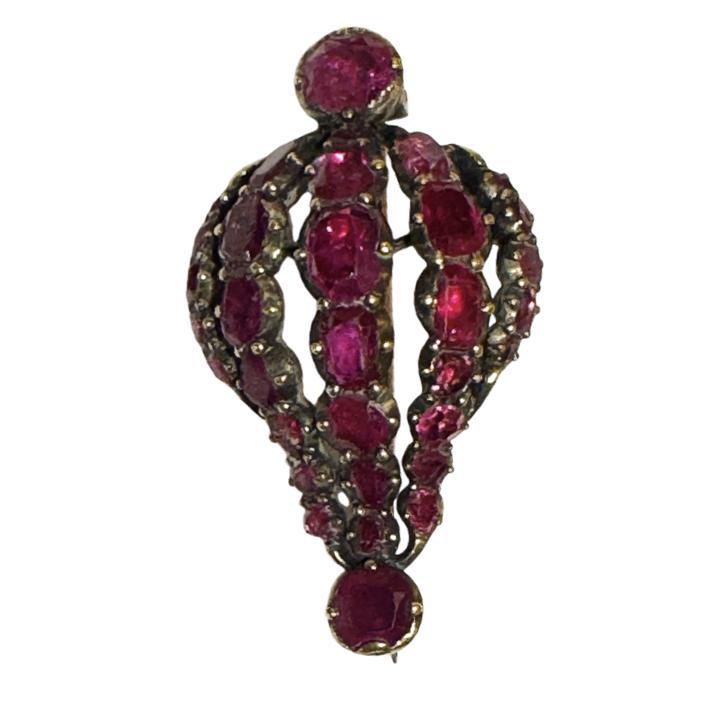
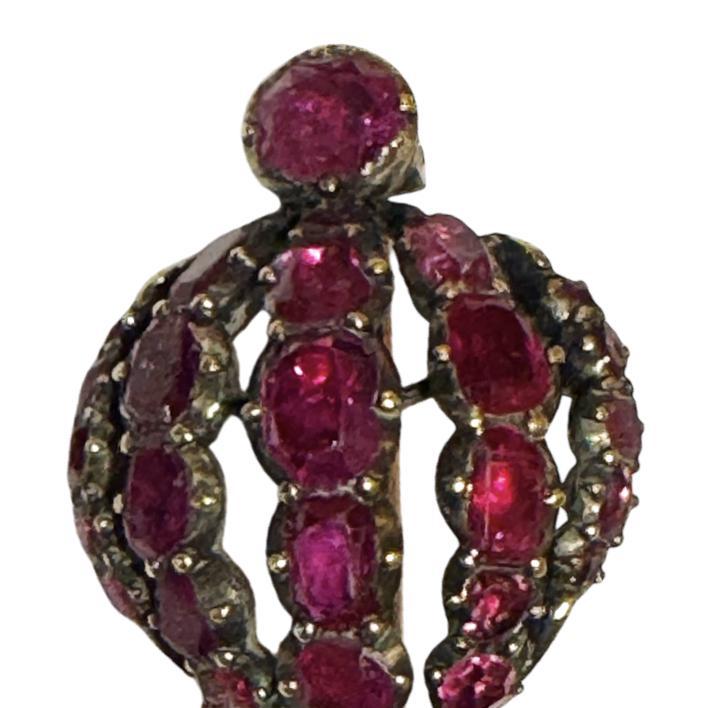
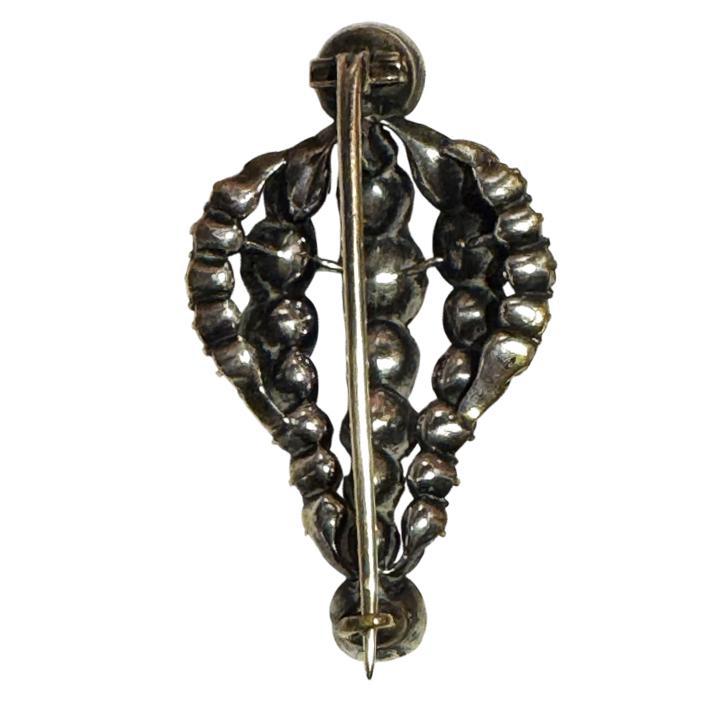
A rare and highly evocative English Georgian brooch, fashioned as a hot-air balloon and set with natural rubies in silver and gold, circa 1784. More than a charming jewel, it is a miniature record of one of the great public sensations of the late 18th century: the birth of manned balloon flight in Britain.
The balloon form commemorates the extraordinary ascent made by the Italian aeronaut Vincenzo Lunardi, who launched Britain's first successful manned hydrogen-balloon flight from London on 15 September 1784. Inspired by the pioneering flights of the Montgolfier brothers in France, Lunardi's ascent captivated London. Vast crowds gathered to watch, and the event attracted widespread press coverage and royal attention. Balloon imagery swiftly became one of the most fashionable motifs of the period, appearing across jewellery, decorative arts, prints, and textiles.
This jewel captures that excitement in a wonderfully compact and wearable form. The richly coloured natural rubies give the balloon a vivid, celebratory presence, while the use of silver and gold is characteristic of refined Georgian jewellery-making. Its design transforms a moment of scientific daring and public spectacle into a precious personal ornament, reflecting the era's fascination with invention, adventure, and the possibilities of the modern world.
Balloon jewels from this early moment are especially desirable for their historical specificity and their rarity. They were made during a brief period when aviation was a newly imagined wonder, and surviving examples offer a tangible connection to the exhilaration surrounding Britain's first balloon flights.
An exceptional piece for collectors of Georgian jewellery, historic commemorative jewels, aviation memorabilia, or jewels with an unusual and compelling story. Its combination of rarity, natural rubies, period craftsmanship, and direct association with the pioneering age of flight makes it a particularly memorable example of late 18th-century English design.
Early balloons were hydrogen filled, risky and unpredictable, yet they captured public imagination. Scientific societies debated their military and meteorological value, while showmen toured cities offering paid ascents. Accidents and high costs limited progress, and practical applications remained elusive.
By the century's end, ballooning in Britain was more spectacle than science, but it laid foundations for later aeronautical experimentation and inspired future inventors and dreamers across generations.
Dimensions:
RELATED ITEMS